
The challenge
Hypertension among elderly individuals is a chronic condition that demands consistent lifestyle management between hospital visits. However, elderly patients frequently forget medications, fail to record daily blood pressure readings, or lose handwritten notes. Harmful dietary habits, lack of physical activity, sleep deprivation, and chronic stress often go unnoticed, while community nurses lack real-time visibility into abnormal blood pressure spikes during the 3- to 6-month gaps between scheduled outpatient appointments.
The solution
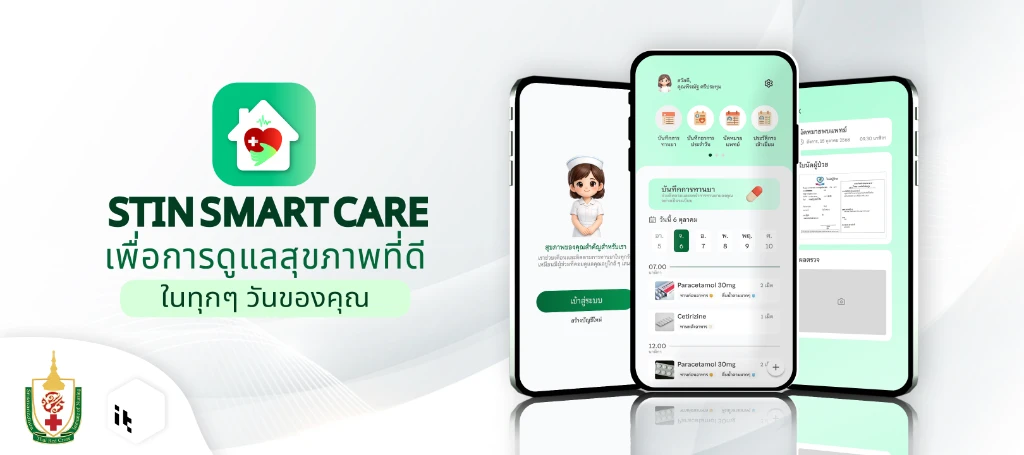
INTECH collaborated with Srisavarindhira Thai Red Cross Institute of Nursing to engineer STIN Smart Care. The platform features an elderly-friendly mobile application built around geriatric UX standards—featuring large typography, medication reminders, doctor appointment alerts, and intuitive tracking for vitals, diet, exercise, sleep, and stress. The mobile client synchronizes with a clinical management portal for nurses to monitor trends, receive critical threshold alerts, and communicate guidance directly under strict PDPA personal data security standards.
Scope of work
- Geriatric-friendly mobile application with enlarged touch targets, high contrast, and reduced cognitive load
- Intelligent medication reminder engine with dosage schedules and empirical adherence logging
- Doctor appointment alert system with automated reminders and pre-visit preparation checklists
- Daily vitals and symptom recording (systolic/diastolic blood pressure, pulse rate, dizziness, and chest tightness)
- Holistic lifestyle tracking: dietary sodium intake, physical activity, sleep duration, and visual stress assessments
- Nurse clinical management dashboard featuring risk triage and longitudinal health trend analytics
- Automated critical threshold alerting system notifying assigned nurses of severe blood pressure spikes
- Secure direct communication channel enabling personalized dietary and lifestyle counseling between nurses and patients
- Strict PDPA compliance, end-to-end encryption, and role-based access control protecting sensitive health records
Behind the build
The Clinical Challenge of Geriatric Hypertension in Community Care
Hypertension is among the most pervasive non-communicable diseases (NCDs) affecting elderly populations. Frequently termed the “silent killer,” elevated blood pressure rarely exhibits acute symptoms in its early stages. Yet without sustained management, uncontrolled hypertension leads directly to stroke, myocardial infarction, and progressive renal impairment.
Effective hypertension management does not occur solely in the outpatient examination room every few months; it depends entirely on daily lifestyle habits and therapy compliance across all 365 days of the year. Field research conducted by the Srisavarindhira Thai Red Cross Institute of Nursing revealed recurring obstacles in community-dwelling seniors:
- Medication Non-Adherence: Seniors commonly manage complex polypharmacy regimens. Missing doses or taking medications at irregular intervals is the leading cause of erratic blood pressure fluctuations.
- Fragmented and Lost Health Logs: Recording blood pressure in paper notebooks often results in skipped entries, lost books, and unreadable handwriting. When follow-up appointments arrive, clinicians lack reliable longitudinal records.
- Unmonitored Lifestyle Triggers: High dietary sodium, sedentary routines, insomnia, and psychological stress trigger blood pressure surges, but these factors are rarely tracked systematically.
- Digital Accessibility Barriers: Conventional health apps feature dense layouts, small touch targets, and complex nested menus that intimidate elderly users and lead to rapid abandonment.
Designing for Aging Adults: Geriatric-Friendly UX Principles
To ensure elderly patients could comfortably use STIN Smart Care independently without relying on relatives, INTECH engineered the mobile interface around geriatric usability and accessibility guidelines:
- Enhanced Visual & Touch Accessibility: The app incorporates high-contrast color palettes complying with WCAG 2.1 AA standards, large readable typography, and generously sized interactive buttons to prevent mis-taps caused by diminished visual acuity or motor tremors.
- Minimal Cognitive Overhead: Each screen presents only one primary action at a time. Medical jargon is replaced with familiar Thai terminology and intuitive visual metaphors—such as pill blister packs, food plates, and sun/moon icons to denote morning and evening routines.
- Clear Medication & Appointment Alerts: Push notifications feature loud, recognizable audio chimes and distinct vibrations. Upon opening the notification, the screen displays a visual image of the prescribed medication with the dosage. A single prominent button logs adherence.
- Rapid 5-Pillar Health Logging:
- Blood Pressure & Pulse: Clear input fields for systolic and diastolic readings with immediate color-coded safety indicators (green = normal, yellow = pre-hypertension, red = danger).
- Dietary Intake: Visual food categories identifying high-sodium, salted, or processed food consumption.
- Physical Activity: Simple logs for daily movement such as walking, arm-swing exercises, or household gardening.
- Sleep Quality: Sleep duration and perceived restfulness logs.
- Stress & Emotional Well-Being: An intuitive visual mood scale utilizing relatable face expressions.
Nurse Clinical Management Portal & Proactive Intervention
To bridge the gap between patient homes and clinical institutions, STIN Smart Care provides a dedicated web portal for community and clinical nurses:
- Patient Triage Dashboard: Nurses view their assigned patient cohort with automated risk stratification. Patients with persistent spikes, unmanaged symptoms, or missed medications are prioritized at the top of the queue.
- Automated Critical Threshold Alerts: When a patient records blood pressure exceeding defined clinical limits, the system triggers an immediate alert to the primary nurse, enabling rapid phone check-ins or local community health volunteer dispatches.
- Secure Direct Messaging: Nurses can send personalized dietary encouragement, lifestyle guidance, and consultation notes directly to the patient’s phone, reinforcing patient trust and therapeutic rapport.
Engineering Standards, Go Backend & PDPA Compliance
Handling sensitive medical records demands dependable infrastructure, predictable response times, and robust data protection standards:
1. Backend Service: Engineered with Go (Golang)
The backend architecture is built in Go (Golang), adhering to strict Clean Architecture design:
- High Concurrency & Low Latency: Go’s goroutines effortlessly manage scheduled push notifications dispatched to thousands of elderly patients simultaneously without degrading API throughput.
- Clean Architecture Boundaries: Clear separation between Domain Entities (hypertension assessment rules, clinical thresholds), Use Cases (daily logging, notification pipelines), Repositories, and RESTful Handlers guarantees testability and long-term code maintainability.
- Operational Reliability: Compiled Go native binaries run with low memory footprints in Docker containers, ensuring continuous 24/7 reliability.
2. Personal Data Protection Act (PDPA) Compliance
Patient health records constitute Sensitive Personal Data under Thailand’s Personal Data Protection Act B.E. 2562 (PDPA). The platform enforces strict safeguards:
- Full Lifecycle Data Encryption: All network traffic is encrypted via TLS 1.3, and patient medical histories are encrypted at rest using industry-standard AES-256 in PostgreSQL.
- Explicit Consent Management: Clear, transparent consent collection prior to app onboarding, detailing exact clinical usage scopes.
- Role-Based Access Control (RBAC): Only designated, assigned healthcare personnel can view identified patient health histories, backed by immutable access logs tracking every clinical record view.
Outcomes
- Substantially enhanced medication adherence among elderly patients living independently in the community
- Enabled nurses to detect dangerous blood pressure surges early, preventing emergency hypertensive complications
- Empowered patients and families with clear awareness of lifestyle impacts on cardiovascular health
- Ensured sensitive patient health data remains thoroughly protected in strict accordance with PDPA regulations
Technology
- Go
- Flutter
- PostgreSQL
- Docker
- Tailwind CSS