
The challenge
Mastering element names, atomic symbols, and periodic groupings poses persistent hurdles for high school chemistry students. Rote memorization often creates classroom fatigue and fails to foster long-term conceptual retention. Conventional paper bingo games presented severe logistical friction: tedious physical card printing, paper waste, inaccurate manual verification, and lack of engaging visual feedback for large classroom settings.
The solution
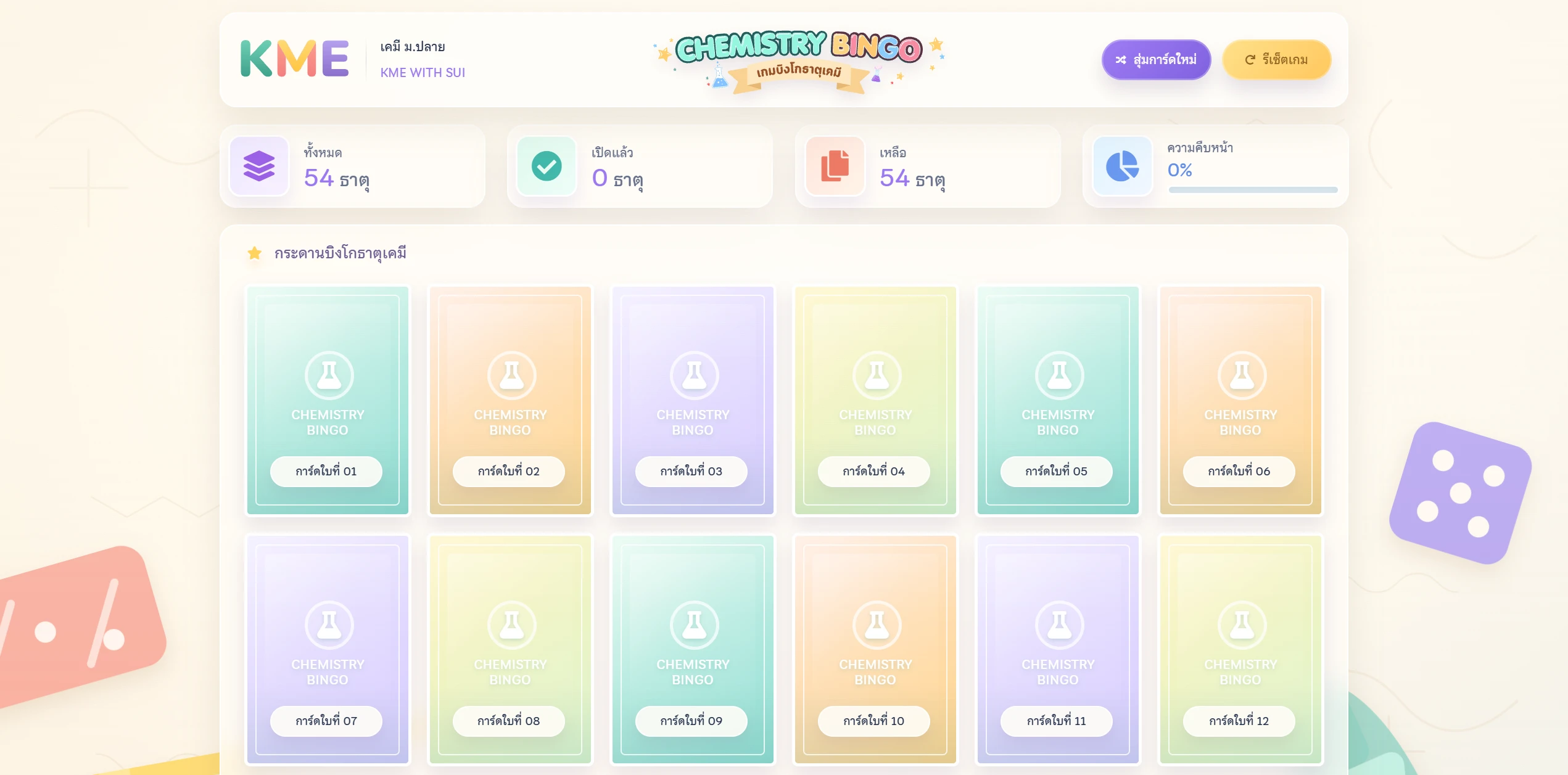
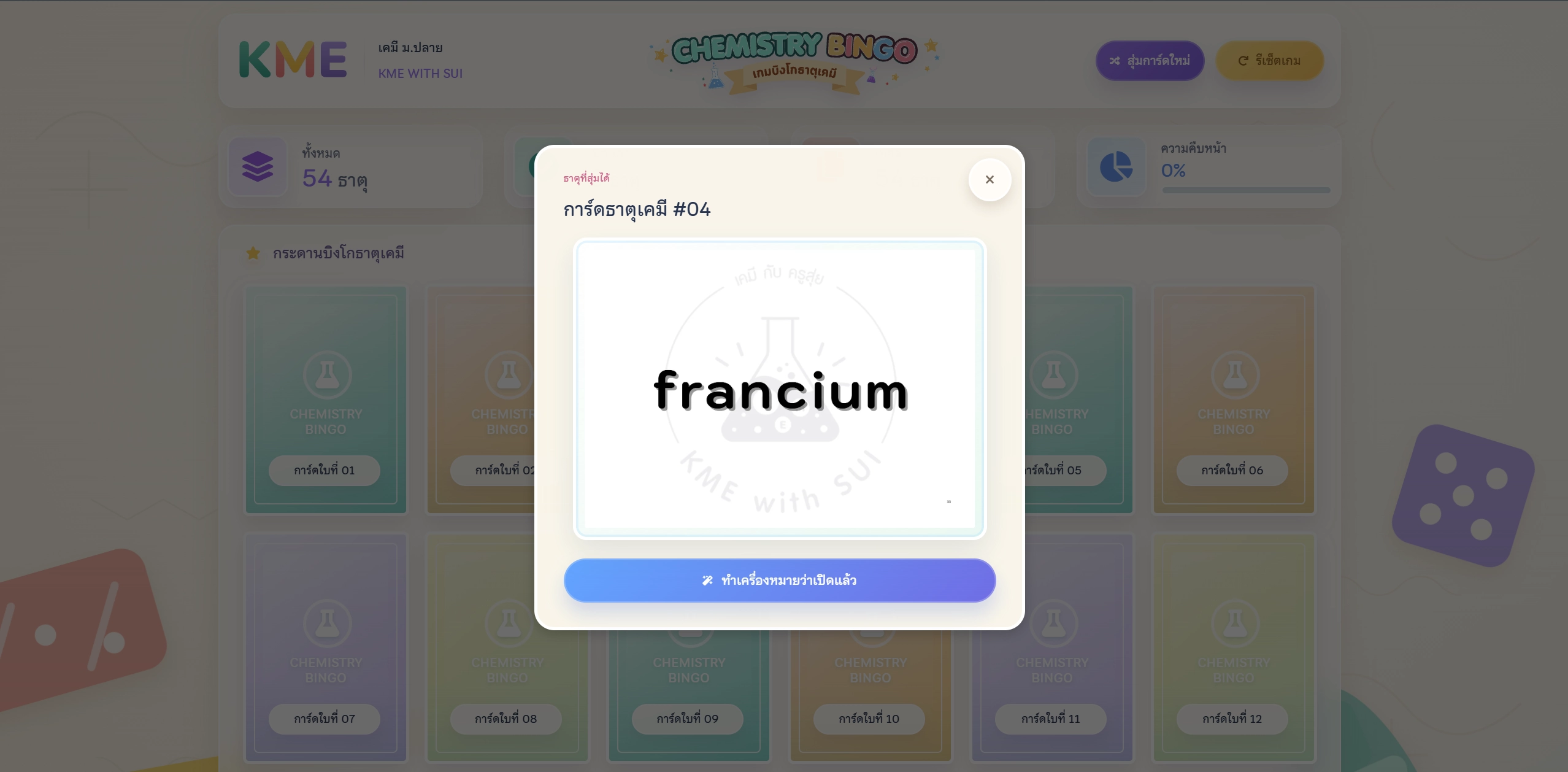
INTECH collaborated with secondary school chemistry teachers to engineer CHEMISTRY BINGO. The application transforms the periodic table into a curated 54-element interactive digital deck. Projected onto classroom smartboards, educators draw random cards revealing element names (such as Francium) within animated pop-up modals. Live game statistics and progress bars update asynchronously via AJAX with zero page reloads.
Scope of work
- 54-element curated interactive card deck tailored to secondary chemistry curriculum milestones
- Non-repeating card shuffling algorithm guaranteeing fair, unbiased randomized element draws
- Interactive element reveal modal featuring prominent element typography and manual status verification
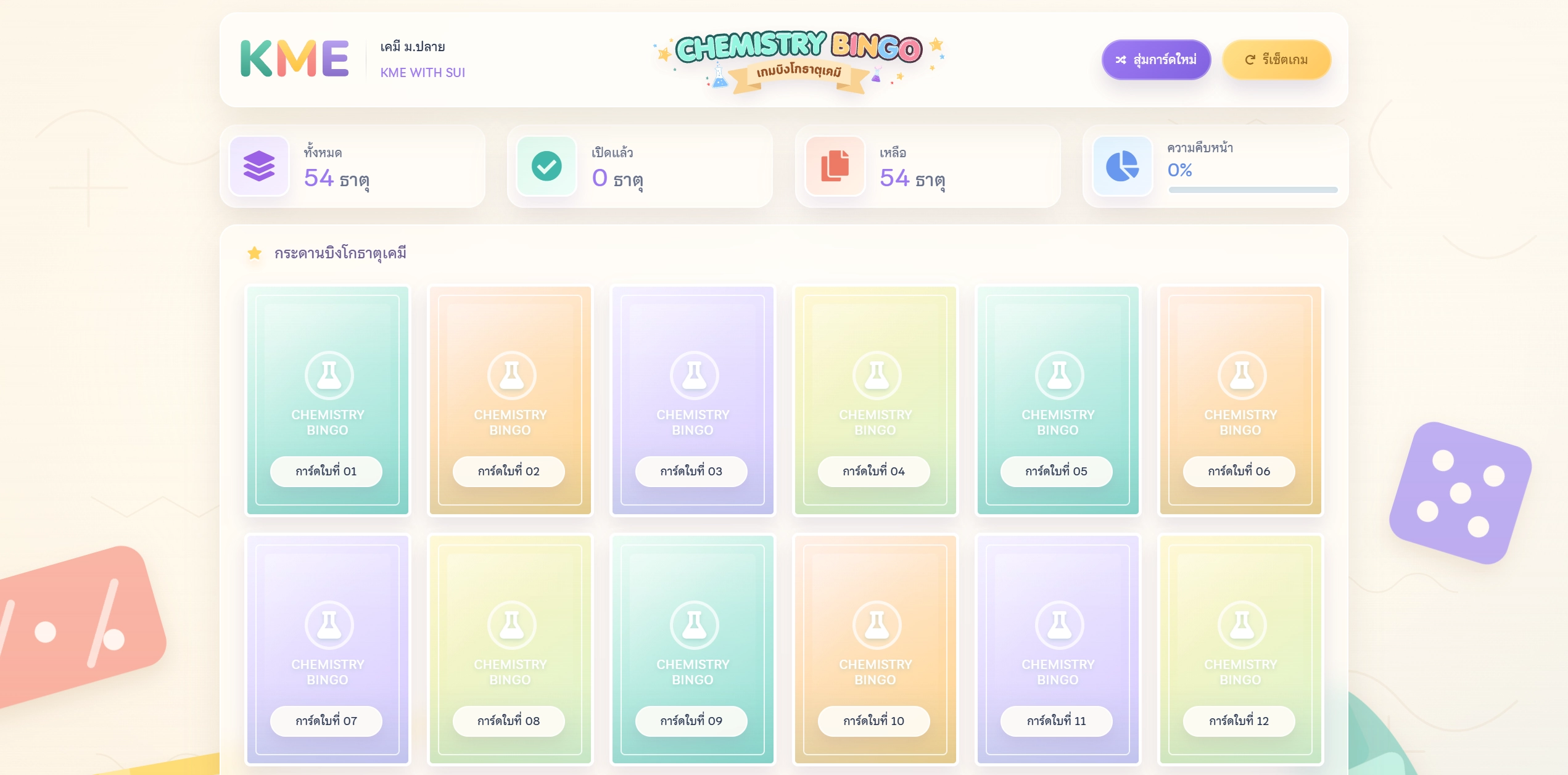
- Real-time classroom metrics dashboard: total elements, revealed count, remaining deck, and progress percentage
- Educator control console with instant "Shuffle New Card" and "Reset Game" buttons
- Asynchronous client-side DOM synchronization via AJAX, maintaining fluid lesson pacing without page refreshes
- Clean pastel-themed responsive design optimized for mobile tablets and high-definition classroom projectors
Behind the build
The Pedagogical Need in High School Chemistry
The periodic table of elements serves as the structural foundation of secondary school chemistry education. Without a solid familiarity with element names, atomic symbols, and periodic trends (such as alkali metals, halogens, noble gases, and transition elements), students encounter severe difficulties when learning chemical bonding, reaction stoichiometry, and solution properties.
Historically, instructional methods relied heavily on rote memorization or traditional paper bingo grids with numbered counters. In crowded secondary classrooms, paper-based games introduced notable friction:
- Preparing dozens of unique printed bingo sheets took hours and generated recurring paper waste.
- Students seated at the back often misheard element names or confused similar symbols.
- Manual card verification caused frequent classroom interruptions and disputes whenever a student claimed a “Bingo.”
- Instructors lacked a centralized dashboard to track game progress and remaining elements within the class period.
To solve this, civil service chemistry educators under the Secondary Educational Service Area Office Phang Nga, Phuket, Ranong (under the “KME High School Chemistry” initiative) partnered with INTECH to develop CHEMISTRY BINGO—an interactive, digital learning tool tailored specifically for secondary science laboratories.
Design Philosophy: Intuitive, Engaging, and Clinically Precise
CHEMISTRY BINGO was designed to balance classroom excitement with pedagogical rigor:
- Curated 54-Element Deck: Rather than overwhelming students with all 118 elements, the deck concentrates on 54 foundational elements most relevant to core curriculum standards and college entrance examinations.
- Real-Time Game Metrics Dashboard: Four responsive status cards anchor the top of the interface:
- Total: Displays the complete 54-element deck size.
- Revealed: Live tally of elements drawn during the current session.
- Remaining: Clear countdown of unrevealed cards.
- Progress (%): Dynamic progress bar reflecting the game completion rate in real time.
- Interactive Card Deck & Reveal Modal: Cards are styled as elegant laboratory glassware in soft pastel tones. When the educator initiates a draw, an animated modal centers on the screen, prominently presenting the drawn element (e.g., francium). This enables the entire classroom to read, pronounce, and locate the symbol together before clicking “Mark as Opened.”
- Single-Click Educator Controls: The instructor console provides immediate actions: “Shuffle New Card” to advance the game and “Reset Game” to clear state and prepare for the next student group without manual reload delays.
Driving Active Learning in the Classroom
Integrating CHEMISTRY BINGO directly into laboratory periods yielded immediate engagement shifts:
- Passive listening transformed into active visual recognition as students scanned their individual bingo matrices.
- Repeated visual reinforcement of element names and symbols fostered durable long-term memory without exam pressure.
- Collaborative group play encouraged peer discussions regarding periodic groups, valence electrons, and element reactivity.
Technical Architecture & Clean Code (PHP, JavaScript & AJAX)
CHEMISTRY BINGO was engineered adhering to Clean Architecture principles to ensure lightweight performance and zero maintenance overhead:
1. Backend Service: PHP & MySQL Architecture
- Curated Element Model: Stores chemical attributes, symbols, and classification metadata cleanly in MySQL.
- Fair Shuffling Algorithm: Server-side randomization logic ensures opened elements are never redrawn within the same game cycle.
- Modular Code Structure: Clear separation of data models, game controllers, and view templates guarantees code readability and effortless adjustments.
2. Frontend: JavaScript, AJAX & Semantic CSS
- Asynchronous DOM State (AJAX): Element reveals, counter updates, and progress bar recalculations execute via asynchronous AJAX requests, keeping the UI silky-smooth without screen flickers.
- Accessible Modal Architecture: The card reveal modal is built with lightweight semantic markup, ensuring instant loading, smooth CSS transitions, and keyboard accessibility.
- Projector-Optimized Responsive Layout: Visual hierarchy and font contrast were tested specifically for high-lumen classroom projectors, smartboards, and student mobile devices.
Project gallery
Outcomes
- Transformed passive lecture sessions into energetic active learning workshops that engaged all students
- Substantially boosted student retention of element nomenclature, periodic trends, and chemical symbols
- Eliminated recurring paper printing expenses and physical game preparation time for educators
- Delivered smooth, dependable performance across budget school devices and high-resolution display hardware
Technology
- PHP
- JavaScript
- AJAX
- HTML
- CSS
- MySQL